Posts

Showing posts with the label Constituent Assembly Debates

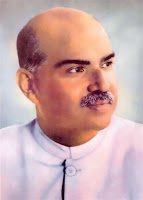
Dr. Syama Prasad Mookerjee on Hindi-National Language discussion in Constituent Assembly
Image
CONSTITUENT ASSEMBLY OF INDIA DEBATES (PROCEEDINGS) - VOLUME IX   Tuesday, the 13th September 1949 Dr. Syama Prasad Mookerjee on  Hindi National Language discussion in Constituent Assembly The Honourable Dr. Syama Prasad Mookerjee (West Bengal: General) Mr. President, Sir, we are considering a matter which is of vital importance, not to the people belonging to one or other of the provinces of India , but to the entire millions of India's population. In fact, Sir, the decision that we are about to take, even if we ignore for the time being the points of difference, vital though they may appear. to some, the decision that we are about to take is something which has never been attempted in the history of India for the last thousands of years. Let us therefore at the very outset realise that we have been able to achieve something which our ancestors did not achieve. Some Members have spoken not doubt out of the warmth of their feeling and have tried...

How to Study Constituent Assemby Debates (Proceedings): Surya Pratap Singh Rajawat

Know Your Constitution through Constituent Assembly Debates issues to be decided by P resent Generation -" We, the people of India" sr Issues decided by Constituent Assembly Pending issues to be decided by Parliament Alternate solution   to be decided by Parliament Issues bad in implementation Issues to be decided by judiciary 1 Prohibition of   untouchability Article 370(now removed) Affirmative action(EWS) Hindi-State language scope of  Judicial review 2 Equality of women Declaration of National song- Vandemataram Compulsory   NCC training in schools or colleges Judgment in HC   in mother/ state- regional    language Laxman Rekha on the issues of Faith , tradition and religion 3   Universal adult suffrage Uniform Civil Code Minimum education qualification for legislatures Right to Educat...

Role of Judiciary in Republic India - Constituent Assembly Debates

Role of Judiciary in Republic India  Shri Alladi Krishnaswami Ayyar : (Madras : General) While there can be no two opinions on the need of the maintenance of judicial independence, both for safeguarding of individual liberty and the proper working of the Constitution, it is also necessary to keep in view one important principle. The doctrine of independence is not to be raised to the level of a dogma so as to enable the judiciary to function as a kind of super-legislature or super-executive. The judiciary is there to interpret the Constitution or adjudicate upon the rights between the parties concerned. As has been pointed out recently in a leading decision of the Supreme Court, the Judiciary as much as the Congress and the Executive, are depending for its efficient and proper functioning, upon the co-operation of the other two.

Condolence on death of the members of Constituent Assembly of India during proceedings

Condolence on death of the members of Constituent Assembly of India during proceedingd Sr No CONSTITUENT ASSEMBLY OF INDIA DEBATES (PROCEEDINGS) - Condolence on death of 1   VOLUME I Monday, the 9th December 1946   MR. PRASANNA DEB RAIKUT 2 VOLUME III Monday, the 28th April 1947 1. Raja Maheshwar Dayal Seth from U.P. 2. Sir Azizul Haque from Bengal, and 3. W. K. L. Mazumdar from Baroda. The death of the last named gentleman has come as a shock because of the tragic  circumstances in which it took place. I understand that he was on his way to attend  this Session of the Assembly and the railway compartment in which he was travelling   caught fire as a result of which he lost his life  3 VOLUME VII Thursday, the 4th November 1948 HOMAGE TO THE FATHER OF THE NATION Mr. President: Honourable Members, before we take up the items on the Order Pape...

Amendment No 1356-'The Legislature of the Union shall be called the Indian National Congress" was negatived

CONSTITUENT ASSEMBLY OF INDIA DEBATES (PROCEEDINGS)- VOLUME VII Monday, the 3rd, January 1949. Shri M. Ananthasayanam Ayyangar (Madras : General): .....Sir, so far as the name is concerned, there has been a suggestion that has been moved by my honourable Friend, Begum Aizaz Rasul and there is a similar amendment also standing in the name of Mr. Lari. Both of them want the name of the Parliament to be changed into the Indian National Congress. I appreciate their motives. It is the Congress which fought for the freedom of this country and therefore these friends who sympathise with the Congress, though they are not participants in this organisation, recommend that the name of this organisation should be associated with the name of the Parliament of the Union. However, laudable this may be, if it is accepted, it would lead to the accusation that a one-party government has been established in this country. The very same friends might say, "Look at what is happening. The Cong...

Upanishad and German Philosopher Schopenhauer in Constituent Assembly

Shri Lala Raj Kanwar: Sir, in the Upanishads, which are the repository of concentrated wisdom and divine knowledge, and about which the great German Philosopher Schopenhauer said that "in the whole world there is no study so elevating as that of the Upanishads, which has been the solace of my life and which will be the solace of my death", it is written:  As one thinks from the mind, so he speaks from the mouth; as one speaks from the mouth, so he acts; as one acts, so he becomes. That is, the deeds proclaim the man. Language is the outward expression of our innermost thoughts and a common national language is a prime necessity as it makes for unity and cohesion in a manner in which no other single factor does.

Constitutional Morality : Dr Ambedkar

Image
Constitutional Morality being the logic behind the longest Constitution  of India, best explained by Dr Ambedkar in Constituent Assembly while introducing the draft Constitution in Constituent Assembly. CONSTITUENT ASSEMBLY OF INDIA DEBATES (PROCEEDINGS)- VOLUME VII Thursday, the 4th November 1948 The Honourable Dr. B. R. Ambedkar (Bombay: General):....Grote. the historian of Greece, has said that: "The diffusion of constitutional morality, not merely among the majority of any community but throughout the whole, is the indispensable condition of a government at once free and peaceable;since even any powerful and obstinate minority may render the working of a free institution impracticable, without being strong enough to conquer ascendency for themselves." By constitutional morality Grote meant "a paramount reverence for the forms of the Constitution, enforcing obedience to authority acting under and within these forms yet combined with the habit of open speech...

Truth and Non Violence- essence of teachings of Veda and Upanishads-R. V. Dhulekar

(PROCEEDINGS)-VOLUME II Tuesday, the 21st January, 1947 Shri R. V. Dhulekar (United Provinces: General):  *[Mr. President, the Resolution moved by the Hon'ble Pandit Jawaharlal Nehru has been seconded; many speeches have been delivered on it and many objections have been raised to the clauses of the Resolution. Dealing with the speeches made and objections raised, I shall express my views in support of the Resolution. Mahatma Gandhi has summarised the philosophy of human life in two words--truth and non-violence. Truth is justice, right action and that which is obligatory; truth and non-violence is not to injure others, not to deprive others of their liberty and possessions and is to protect live; and the social rights of others. These two, truth and non-violence, are the essence of the teachings of the Vedas and Upanishads, the two form the creed of the Congress and the Resolution before the House is based on them. The Resolution is the true expression of the sentimen...

Invoking Rig Veda in Constituent Assembly

CONSTITUENT ASSEMBLY OF INDIA DEBATES (PROCEEDINGS)-VOLUME II Monday, the 20-21 January, 1947 Shri Algurai Shastri (United Provinces: General): All the human ideals of ages--equality, fraternity and brotherhood--are embodied in this Resolution. In the eighth. 'Mandal' of the 'Rig Veda' is a hymn which says: "All human beings are equal. The King should have the same regard for his subject that a mother has for her sons." I am glad that all such higher ideals, we have been taught for ages, are enunciated in the Resolution and therefore I am here to support it. . The Resolution visualises a State where there is no dearth of food and cloth and distribution is equitable. It embodies scientific socialistic ideals when it says "to each according to his needs and from each according to his capacity". All the ideals of a State conceived in the 'Bhagwat' are embodied in the Resolution. It is the sacred duty of a State to provide i...

Message from the Prime Minister and Acting Minister of Foreign Affairs,Oslo.- 15 August 1947

CONSTITUENT ASSEMBLY OF INDIA DEBATES (PROCEEDINGS)- VOLUME V Friday, the 15th August 1947 Message from the Prime Minister and Acting Minister of Foreign Affairs,Oslo. On this Great Day of National Rejoicing for the Peoples of India I have the honour to transmit to you my very best wishes for the prosperity of your country.

Message from His Majesty's Minister in Nepal-15 August 1947

CONSTITUENT ASSEMBLY OF INDIA DEBATES (PROCEEDINGS)- VOLUME V Friday, the 15th August 1947 Message from His Majesty's Minister in Nepal. My staff join me in offering warmest congratulations on establishment of Dominion of India and send all good wishes for future happiness and prosperity of State and its people.

Message from Dr. Soedarsono on behalf of the Republic of Indonesia-15 August 1947

CONSTITUENT ASSEMBLY OF INDIA DEBATES (PROCEEDINGS)- VOLUME V Friday, the 15th August 1947 Message from Dr. Soedarsono on behalf of the Republic of Indonesia. On the eve of the establishment of the Dominion of India it is a great pleasure to the Republic of Indonesia to express her feelings of heartfelt joy, sympathy and friendship. The Republic of Indonesia looks upon India as her Comrade who in time of danger and distress has helped her and will always help her. She may-as both their nationalism is based upon humanity-hope that in the very near future still tighter bonds will be welded, bonds of comradeship in the struggle for Justice and Peace and for the Freedom and Prosperity of millions who for so long a time have lived in squalor amidst luxury and wealth. The people of India since years led by its eminent Leaders undoubtedly is approaching a better and happier future. India will not only become a land of Justice and Prosperity but at the same time a bulwark o...

Message from the President of the Executive Yuan, Nanking-15 August 1947

CONSTITUENT ASSEMBLY OF INDIA DEBATES (PROCEEDINGS)- VOLUME V Friday, the 15th August 1947 Message from the President of the Executive Yuan, Nanking. On this historic occasion of India's attainment of her long cherished aspiration I take especial pleasure in extending to you and the Indian people my sincere felicitations. The Chinese people are deeply gratified by the rebirth of another great nation on the Asian continent. India and China with a common frontier of 2,000 miles have enjoyed the closest and most friendly relations in the course of many centuries Our two nations having stood together through the late world war will undoubtedly continue to march forward together toward the common goal of world peace. I send you my warmest wishes for your continued success and for the happiness and prosperity of the Indian people..

Message from the Prime Minister of Australia-15 August 1947

CONSTITUENT ASSEMBLY OF INDIA DEBATES (PROCEEDINGS)- VOLUME V Friday, the 15th August 1947 Message from the Prime Minister of Australia. I desire to convey the greetings and good wishes of the Government and people of Australia to the Government and people of India on the historic occasion which is being celebrated on the 15th August, The Australian people rejoice in your new status as a free and sovereign nation and warmly welcome your fellow membership in the British Commonwealth of Nations. It is confidently anticipated that your traditions, your ancient culture and the spirit which is animating you in making smooth this period

Message from the Prime Minister of Canada-15 August 1947

CONSTITUENT ASSEMBLY OF INDIA DEBATES (PROCEEDINGS)- VOLUME V Friday, the 15th August 1947 Message from the Prime Minister of Canada. It affords me much pleasure to extend to you, and through you to the Government and people of India, the most cordial wishes of the Government and people of Canada on the occasion of the establishment of India as a completely self-governing nation.

Message from Generalisimo Chiang Kai-shek, President of the Republic of China.-15 August 1947

CONSTITUENT ASSEMBLY OF INDIA DEBATES (PROCEEDINGS)- VOLUME V Friday, the 15th August 1947 Message from Generalisimo Chiang Kai-shek, President of the Republic  of China. On this auspicious occasion when the people of India celebrate' the Dawn of a new era of freedom, I wish to convey to you and the people of India my warm congratulations on the glorious and monumental achievement in which you and Mahatma Gandhi have played such an eminent and noble part, and which, I am confident, will be a source of inspiration to all peoples striving for independence, equality and progress. Please accept my best wishes for India's bright and promising future of success and greatness.

Message from His Grace the Archbishop of Canterbury-15 August 1947

CONSTITUENT ASSEMBLY OF INDIA DEBATES (PROCEEDINGS)- VOLUME V Friday, the 15th August 1947 Message from His Grace the Archbishop of Canterbury. At this time when India and Pakistan become independent Dominions and take upon themselves the full responsibilities of self-Government, on behalf of the Christian people of this country, I send you my greetings and good wishes. In God's providence apparently insuperable difficulties have so far been overcome and all the travail of past ages has led up to this moment of fulfilment and hope. I pray that the two Dominions may go forward to a noble future ever growing in justice and peace, in brotherhood and prosperity.

Message from the Prime Minister of the United Kingdom-15 August 1947

CONSTITUENT ASSEMBLY OF INDIA DEBATES (PROCEEDINGS)- VOLUME V Friday, the 15th August 1947   Message from the Prime Minister of the United Kingdom. My colleagues in the United Kingdom Government join with me in sending on this historic day greetings and good wishes to the Government and the people of India. It is our earnest wish that India may go forward in tranquillity and prosperity and in so doing contribute to the peace and prosperity of the world.

Naming of the country-Seth Govind Das in Constituent Assembly

CONSTITUENT ASSEMBLY DEBATES (PROCEEDINGS) - VOLUME IX Sunday, the 18th September 1949 Seth Govind Das:  Mr. President Sir, I will not take more than five minutes of the House and that too I have to because the atmosphere that was necessary in the House for the naming of the country has been disturbed by the speeches so far delivered. Naming has always been and is even today of great significance in our country. We always,, try to give a name under auspicious stars and also try to give the most beautiful name, I am glad to find that we are giving the most ancient name to our country but, Dr. Ambedkar will excuse me, we are not giving it in as beautiful a way as it was necessary. "India, that is, Bharat" are not beautiful words for, the name of a country. We should have put the words "Bharat known as India also in foreign countries". That would have been much more appropriate than the former expression. We should however, at least have the satisfaction th...

"all natives of this country are referred to as Hindus"-Shri H. V. Kamath

CONSTITUENT ASSEMBLY DEBATES (PROCEEDINGS) - VOLUME IX Sunday, the 18th September 1949 Mr. President : I have told you that if you select the name "Bharat", it is only a question of language and it does not require any speech. Shri H. V. Kamath : I bow to your ruling. I only wish to refer to the Irish Constitution which was adopted twelve years ago. There the construction of the sentence is different from what has been proposed in clause (1) of this article. I feel that the expression "India, that is, Bharat"-I suppose it means "India, that is to say, Bharat"-I feel that in a Constitution it is somewhat clumsy; it would be much better if this expression, this construction were modified in a constitutionally more acceptable form and may I say in a more a aesthetic form definitely in a more correct form. if honourable colleagues in the House would take the trouble of referring to the Irish Constitution passed in 1937, they will see that the I...